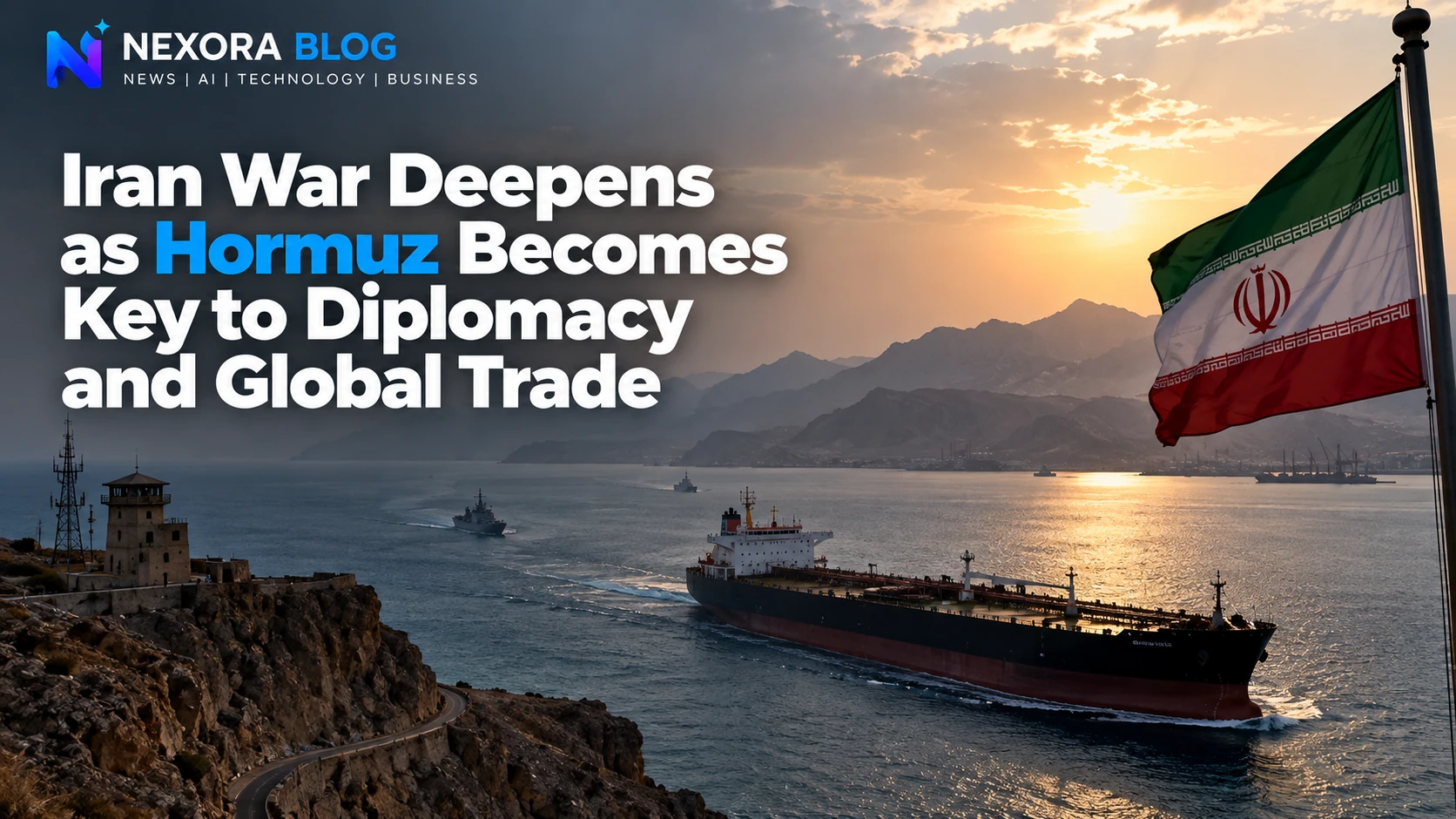
Iran War Deepens as Hormuz Becomes Key to Diplomacy and Global Trade
Published
The Iran war is putting the Strait of Hormuz, oil flows and global trade at the centre of renewed diplomatic efforts.
Key takeaways
- Strait of Hormuz is now central to diplomatic efforts between Iran and the US.
- Iran has proposed reopening the waterway within seven days under its conditions.
- The US has rejected the current proposal, while further talks may still take place.
- The conflict is affecting oil flows, shipping and the wider global economy.
Iran War Deepens as Hormuz Becomes Key to Diplomacy and Global Trade
The Iran conflict has entered another diplomatic phase, with the Strait of Hormuz emerging as one of the most important issues in efforts to reduce the fighting.
Iran has proposed reopening the strategic waterway and moving toward a wider ceasefire arrangement. US President Donald Trump has said he rejected the proposal, while Iranian officials continue to argue that a negotiated solution is possible. Reuters reported that Trump nevertheless expects US negotiators to hold further talks this week.
Why the Strait of Hormuz Matters
The Strait of Hormuz is one of the world's most important energy shipping routes. Disruption there has already reduced shipping and affected oil flows, making the conflict an issue for energy markets and the wider global economy, not only the countries directly involved.
Iran has said it could reopen the waterway within seven days under its proposed arrangement. According to Iranian officials, the plan is tied to easing US military pressure and ending the blockade affecting Iranian ports.
Iran and the United States Remain Far Apart
Tehran says diplomacy is the preferred route out of the conflict. Iranian Foreign Minister Abbas Araqchi said reopening Hormuz depends on conditions being met and that only negotiations can resolve the current deadlock.
The US position remains focused on pressure against Iran, including demands connected to its nuclear programme and regional military activities. A US envoy said Washington rejected the Iranian proposal because Tehran's terms required major concessions before broader negotiations.
The Conflict Has Spread Across the Region
The fighting has increasingly affected other parts of the Middle East.
Reuters reported that Iran has attacked US allies in the Gulf with drones and missiles, while Iran-backed Houthi forces in Yemen have targeted Saudi interests. Saudi Arabia has therefore become more deeply involved in the regional security crisis.
The situation in Yemen is also adding another layer of risk to regional shipping and energy infrastructure.
Oil and Global Business Impact
The most immediate international economic concern is energy.
Reduced shipping through Hormuz has disrupted oil flows and increased uncertainty for importers, shipping companies and businesses exposed to fuel costs. Reuters reported that the conflict has already taken a toll on the global economy.
Any sustained reopening of the waterway could reduce pressure on energy markets. On the other hand, renewed fighting or another prolonged disruption could keep transportation and energy costs elevated.
What About the Nuclear Issue?
The nuclear programme remains one of the central issues in negotiations.
The US has said preventing Iran from obtaining a nuclear weapon is a key objective. Iranian officials, meanwhile, have indicated that Tehran is prepared to discuss its nuclear programme but has rejected what it describes as coercive pressure.
This means that even if an agreement is reached on Hormuz, a wider settlement could require much more complicated negotiations.
What Happens Next?
The immediate focus is on whether US and Iranian representatives can resume meaningful negotiations.
Iran says it is waiting for the definitive US position through mediators. Trump has indicated that further talks could take place this week, leaving diplomacy open despite the rejection of Tehran's current proposal.
The next stage could therefore determine whether Hormuz gradually reopens and regional fighting decreases, or whether the conflict continues to pressure energy markets and trade routes.
Sources: Dawn, Reuters, EIA.
Questions & answers
Why is the Strait of Hormuz important? |
It is a major energy shipping route, so disruption can affect oil supplies, shipping costs and global markets.
What has Iran proposed? |
Iran has proposed reopening the Strait of Hormuz and moving toward an end to regional hostilities under specific conditions.